
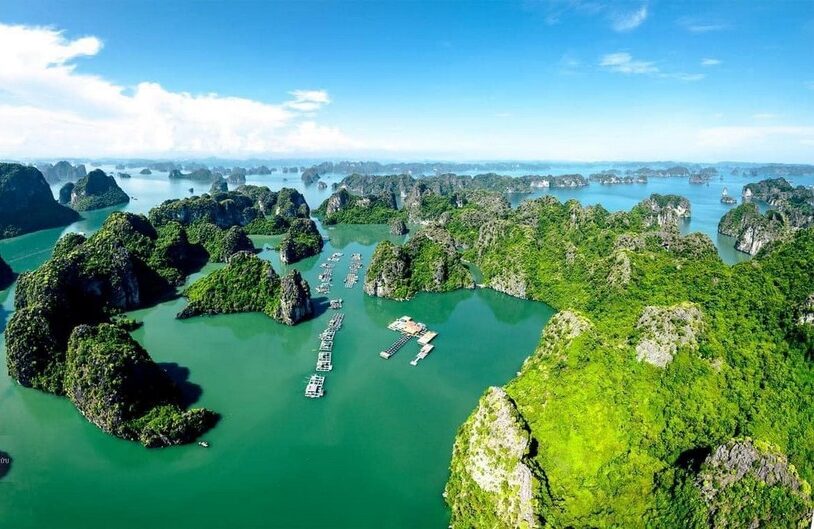
Floating among the limestone islands of Halong Bay and Bai Tu Long Bay, Vietnam’s traditional fishing villages offer a glimpse into a way of life shaped by the sea. Long before overnight cruises became part of the region’s tourism landscape, generations of fishing families lived, worked, and raised their children on these calm waters.
Today, villages such as Vung Vieng, Cua Van, Ba Hang, and Cong Dam have become memorable stops on selected cruise itineraries. Each offers a different perspective on the relationship between local communities and the bay—from floating homes and traditional fishing techniques to quiet lagoons surrounded by limestone karsts.
For travelers interested in more than spectacular scenery, visiting these fishing villages can add a meaningful cultural dimension to a Halong Bay or Bai Tu Long Bay cruise.
What Makes Halong Bay’s Fishing Villages Special?
The fishing communities of Halong Bay developed around the natural conditions of the bay. Sheltered waters, abundant marine resources, and countless islands created an environment where fishing families could live close to their source of livelihood.
Traditional floating communities were once much larger than they are today. Over time, changing environmental, social, and tourism policies have transformed the way local residents live and work on the bay.
Although many families have moved ashore, their connection with the water remains an important part of the cultural heritage of the region.
A visit to one of these communities is therefore not simply a sightseeing stop. It offers an opportunity to understand how people adapted their lives to an extraordinary marine landscape.
1. Vung Vieng Fishing Village
Located in Bai Tu Long Bay, Vung Vieng is one of the most recognizable traditional fishing communities in the region.
Surrounded by limestone islands and calm emerald waters, the village has a peaceful atmosphere that contrasts with the busier cruise routes of central Halong Bay.
A Village Surrounded by Limestone Karsts
One of Vung Vieng’s most distinctive features is its natural setting.
The village sits among dramatic limestone formations, creating a sheltered environment where traditional fishing activities could develop. Approaching the area by a small rowing boat allows visitors to appreciate the relationship between the community and its surroundings.
The journey itself becomes part of the experience as the boat moves slowly through the quiet waters.
Experience Vung Vieng by Local Rowing Boat
Rather than simply observing the village from a distance, visitors can often explore the area by traditional bamboo rowing boat.
Local boatmen navigate the calm waters while sharing insights into life on the bay. The slower pace provides opportunities to observe floating structures, fishing equipment, and the surrounding karst landscape.
For photographers, the combination of traditional boats, limestone islands, and calm water creates some of the most atmospheric scenes in Bai Tu Long Bay.
A More Peaceful Cultural Experience
Vung Vieng is particularly suited to travelers who appreciate a quieter itinerary.
Its location in Bai Tu Long Bay means the experience is often less crowded than visits to some of the better-known attractions in central Halong Bay.
For a traditional junk cruise, this peaceful setting fits naturally with a slower style of travel.

2. Cua Van Fishing Village
Cua Van is one of the most famous fishing communities associated with Halong Bay.
Historically located among the limestone islands of the bay, Cua Van developed as a community whose daily life was closely connected to fishing and the sea.
A Community Shaped by the Sea
For generations, fishing families depended on the waters surrounding their homes.
Their knowledge of tides, weather, fishing grounds, and marine life was passed from one generation to another. This traditional knowledge forms an important part of the cultural heritage associated with Halong Bay.
The village became particularly well known for its distinctive floating houses and small boats moving between the karst islands.
The Cua Van Cultural Perspective
One of the most interesting aspects of Cua Van is the opportunity to learn about the people who historically lived on the bay rather than simply looking at the landscape.
Traditional fishing equipment, boats, floating structures, and stories about life at sea help visitors understand that Halong Bay has long been more than a scenic destination.
It has also been a living environment for coastal communities.
A Different Side of Halong Bay
For travelers who know Halong Bay mainly through photographs of limestone islands, Cua Van provides another perspective.
The landscape remains spectacular, but the focus shifts toward people, traditions, and maritime culture.
This makes the village particularly interesting for visitors who want their cruise itinerary to include a cultural element.

3. Ba Hang Fishing Village
Located near Dau Go Cave and Thien Cung Cave, Ba Hang is a small floating community surrounded by the characteristic limestone scenery of Halong Bay.
Its name is associated with the Vietnamese phrase for “three caves,” reflecting the area’s distinctive karst formations.
A Small Community in a Scenic Setting
Ba Hang is known for its sheltered waters and picturesque surroundings.
The area is well suited to small-boat exploration, allowing visitors to move quietly between limestone formations while observing the landscape at water level.
The combination of narrow waterways, karst cliffs, and traditional rowing boats creates an intimate experience.
Explore by Bamboo Boat or Kayak
Depending on the cruise itinerary and current regulations, visitors may explore Ba Hang by local rowing boat or kayak.
Traveling at water level offers a different perspective from the sundeck of a cruise ship.
Instead of viewing the limestone formations from a distance, you can pass directly alongside them and observe the details of the cliffs, vegetation, and waterways.
A Convenient Cultural Stop
Because Ba Hang is located close to several popular Halong Bay attractions, it can be incorporated naturally into a broader sightseeing itinerary.
This makes it particularly suitable for first-time visitors who want to combine iconic landscapes with a brief introduction to traditional life on the water.

4. Cong Dam Fishing Village
Located in a more remote part of Bai Tu Long Bay, Cong Dam offers a quieter and more secluded experience.
The area is known for its dramatic limestone formations, hidden lagoons, and relatively untouched surroundings.
A Remote Fishing Community
Cong Dam is associated with the traditional fishing culture of Bai Tu Long Bay.
Its more isolated setting provides a strong sense of distance from mainland life. The surrounding landscape is dominated by limestone islands and calm waters, creating an environment where traditional fishing activities historically played an important role.
Discover Hidden Lagoons and Karst Landscapes
One of the highlights of exploring Cong Dam is the opportunity to travel through areas surrounded by limestone formations.
Depending on the itinerary and weather conditions, activities may include kayaking or visiting areas connected with the former fishing community.
The landscape itself is an important part of the experience. The quieter surroundings allow travelers to appreciate Bai Tu Long Bay’s natural character without the atmosphere of a busy tourist center.
For Travelers Seeking a Quieter Route
Cong Dam is particularly appealing to visitors who prefer remote landscapes and slower-paced exploration.
Rather than focusing on a long list of attractions, the experience is about spending time among the karsts, water, and traces of traditional fishing life.

Comparison
Although all four destinations are connected with the fishing heritage of Halong Bay and Bai Tu Long Bay, they offer different experiences.
| Fishing Village | Location | Main Character | Experience |
|---|---|---|---|
| Vung Vieng | Bai Tu Long Bay | Peaceful floating community | Rowing boat, local culture, karst scenery |
| Cua Van | Halong Bay | Historic fishing community | Cultural heritage, floating village scenery |
| Ba Hang | Halong Bay | Small scenic community | Bamboo boat or kayaking, karst waterways |
| Cong Dam | Bai Tu Long Bay | Remote and tranquil | Kayaking, lagoons, traditional fishing heritage |
The choice isn’t necessarily about which village is “better.” Each reveals a different aspect of the relationship between people and the bay.
How Have Fishing Villages Changed?
One of the most important things to understand about Halong Bay’s fishing villages is that they are not frozen in time.
Over recent decades, authorities have introduced policies encouraging floating-community residents to move to the mainland, with environmental protection, access to education and healthcare, and improved living conditions among the considerations.
As a result, many of the floating communities that once had permanent populations have changed significantly.
Today, travelers may see fewer permanent floating homes and fishing families than historical photographs suggest.
This doesn’t make the cultural experience less meaningful. Instead, it provides an opportunity to understand how the region is adapting to the changing relationship between tourism, conservation, and local livelihoods.

Why Fishing Villages Matter to the Cruise Experience
A Halong Bay cruise is often associated with limestone islands, caves, beaches, and panoramic views.
Fishing villages add another layer.
They help answer a simple question:
Who has lived among these islands?
Seeing local boats and traditional fishing equipment gives context to the landscape. The bay becomes more than a collection of beautiful photographs—it becomes a place shaped by generations of people whose lives depended on the sea.
For travelers interested in Vietnamese culture, these encounters can be among the most memorable moments of an overnight cruise.
How to Visit a Fishing Village Responsibly
Fishing villages are communities with their own history and cultural identity, so respectful travel is important.
Respect Local Privacy
If you encounter residents or their homes, remember that you are visiting their community rather than a theme park.
Avoid entering private spaces or photographing people without permission.
Follow the Cruise Guide’s Instructions
Your guide or crew will know the appropriate areas to visit and the current rules for activities.
Following their instructions helps protect both visitors and local communities.
Avoid Leaving Waste Behind
The marine environment is particularly sensitive to pollution.
Keep all rubbish onboard or dispose of it in designated areas, and avoid single-use plastics whenever possible.
Learn Rather Than Simply Photograph
Take time to listen to your guide or local boat operator.
Learning about fishing traditions, local geography, and changes in community life can make the visit much more meaningful.

Which Fishing Village Should You Visit?
The answer depends on the cruise route you choose.
If your itinerary focuses on Bai Tu Long Bay, Vung Vieng and Cong Dam offer opportunities to explore the quieter side of the region and learn about its fishing heritage.
If you’re cruising through central Halong Bay, Cua Van and Ba Hang can add a cultural dimension to an itinerary that also includes some of the bay’s iconic caves and limestone landscapes.
Because cruise itineraries can change according to weather, operating conditions, and local regulations, it’s always advisable to check the current program with your cruise operator.
Experience the Fishing Heritage of Bai Tu Long Bay
For travelers interested in exploring the quieter side of northern Vietnam, a traditional junk cruise through Bai Tu Long Bay provides an ideal setting for discovering its natural and cultural heritage.
Bai Tho Junks operates traditional-style cruise itineraries in the region, including routes that feature cultural experiences such as visits to Vung Vieng Fishing Village. With a smaller vessel and a slower pace, the journey allows guests to experience the landscape from the water while learning about the communities that have historically called the bay home.
The appeal is not simply in seeing a fishing village. It is in understanding how the sea, limestone islands, and people have shaped one another over generations.
Final Thoughts
The fishing villages of Halong Bay and Bai Tu Long Bay reveal a side of the region that can easily be missed when the focus is solely on caves, beaches, and limestone karsts.
Vung Vieng, Cua Van, Ba Hang, and Cong Dam each offer a different perspective on Vietnam’s maritime heritage. Some are associated with historic floating communities, while others are valued for their remote landscapes and opportunities to explore the bay at a slower pace.
As the communities themselves continue to change, visiting responsibly becomes increasingly important. A thoughtful encounter can help travelers appreciate not only the extraordinary landscape of the bay, but also the generations of people whose lives have been connected to these waters.
For anyone planning a Halong Bay or Bai Tu Long Bay cruise, adding a fishing village experience can turn a beautiful journey into a more meaningful exploration of the region’s natural and cultural heritage.
FAQs
What are the main fishing villages to visit in Halong Bay and Bai Tu Long Bay?
Four well-known fishing village destinations associated with Halong Bay and Bai Tu Long Bay are Vung Vieng, Cua Van, Ba Hang, and Cong Dam. Vung Vieng and Cong Dam are associated with Bai Tu Long Bay, while Cua Van and Ba Hang are located in Halong Bay. Each offers a different combination of fishing heritage, limestone scenery, local boat experiences, and cultural history.
Can tourists still see people living in the fishing villages?
The traditional floating communities have changed considerably over time, and many former residents have moved to the mainland as part of government-supported resettlement and development policies. Therefore, visitors should not expect to see large permanent floating communities as depicted in older photographs. Some areas continue to be connected with fishing activities and cultural tourism, allowing travelers to learn about the communities’ history and maritime traditions.
How can I visit Vung Vieng Fishing Village?
Vung Vieng can be visited as part of selected Bai Tu Long Bay cruise itineraries. Guests typically travel from the cruise vessel to the village area by a smaller traditional rowing boat, where local boatmen navigate the calm waters around the limestone formations. Because routes and activities can change according to weather, operating conditions, and local regulations, travelers should check the specific itinerary with their cruise operator before departure.
What is the difference between Cua Van and Vung Vieng Fishing Village?
Cua Van is historically associated with Halong Bay and is one of the region’s most recognizable fishing communities, while Vung Vieng is located in Bai Tu Long Bay and is known for its quieter surroundings among limestone islands. Both provide insight into the region’s fishing heritage, but the surrounding cruise routes and overall atmosphere are different. Vung Vieng is particularly suited to travelers looking for a more peaceful Bai Tu Long Bay experience.
Can I visit these fishing villages on every Halong Bay cruise?
No. Fishing village visits depend on the cruise operator, itinerary, route, weather conditions, and current local regulations. Some cruises focus on central Halong Bay and may include Ba Hang or Cua Van, while selected Bai Tu Long Bay itineraries include destinations such as Vung Vieng or Cong Dam. It is best to check the specific cruise itinerary before booking if visiting a fishing village is important to your trip.


 Français
 Tiếng Việt