1920s–1930s: When Halong Bay First Entered the World Map
There was a time when Halong Bay was not yet a global destination, but already quietly present in the imagination of travelers. In the early decades of the 20th century, during the French colonial period, the bay began to appear in travel documents, postcards, and tourism publications produced across Indochina. These were not casual mentions, but structured efforts to introduce Halong Bay alongside other major destinations in the region such as Angkor or Hue, positioning it as a place of both natural beauty and cultural intrigue.
By the 1920s and 1930s, tourism on the bay had already taken a relatively organized form. One of the most notable operators at the time was the P. Roque company, based in Hòn Gai, which ran a fleet of steam-powered vessels designed for extended journeys across the bay. These vessels were not simple boats; they carried names inspired by gemstones such as Perle, Emeraude, Rubis, and Saphir, reflecting a certain elegance and aspiration associated with early tourism. On board, passengers could find cabins, dining areas, and basic amenities that, for that era, represented a surprisingly complete travel experience.
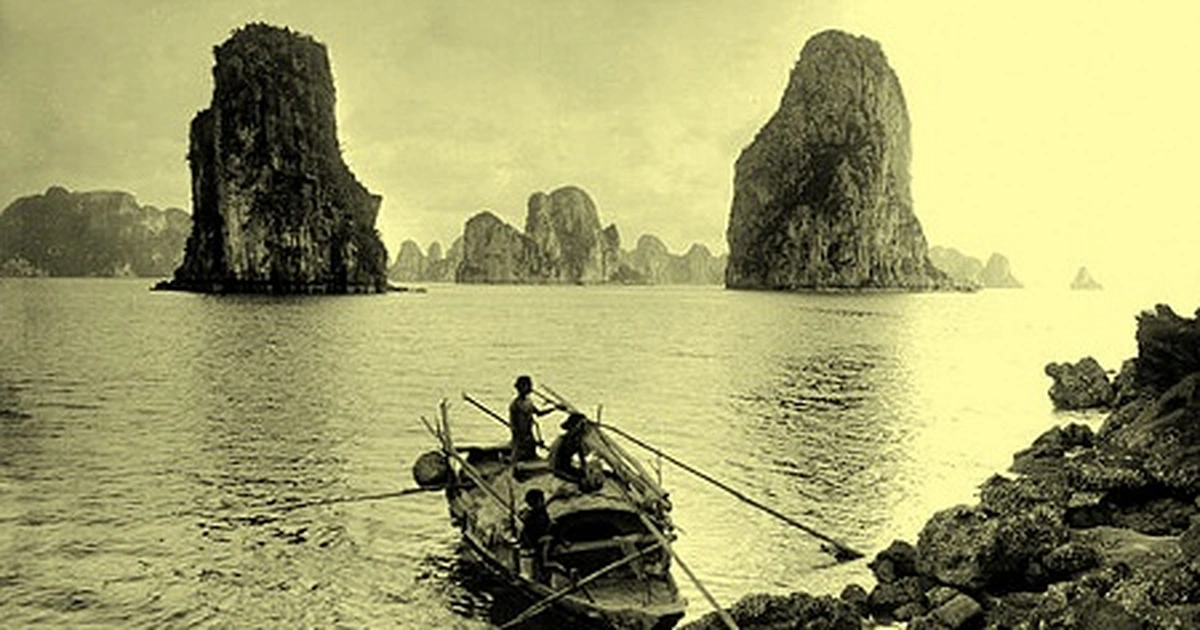
Journeys were typically not short excursions. Instead, they lasted from two to four days, allowing travelers to explore caves, coastal areas, and even nearby mining regions. These early itineraries already contained many elements that remain familiar today: multi-day journeys, overnight stays on the water, and the idea that Halong Bay should be experienced gradually rather than rushed.
Even more telling is the fact that local fishermen were already participating in tourism at that time, rowing small boats to guide visitors through caves and narrow passages. This suggests that from the very beginning, the experience of Halong Bay was not only about landscape, but also about human interaction and local knowledge.
Late 1980s: A Quiet Bay with Only a Handful of State Boats
Following these early developments, Halong Bay entered a long period where tourism did not expand significantly. Historical circumstances meant that travel remained limited, and by the late 1980s, the bay was far from the dynamic destination it would later become.
At that time, tourism activity was concentrated in a small number of state-operated vessels. Among the most notable were Hạ Long 01 and Hạ Long 02, operated by the Quảng Ninh Tourism Company, as well as the vessel Vượt Sóng, managed by the provincial labor union. These boats represented the official tourism infrastructure of the bay, and for a period, they were the only way for visitors to access Halong Bay in an organized manner.
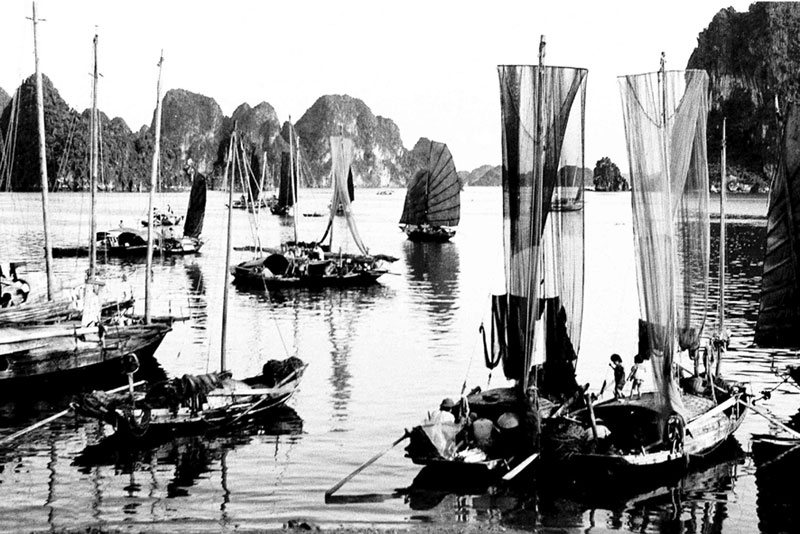
However, the experience they offered was highly structured. Travelers were required to follow fixed itineraries, often traveling in groups and adhering to predefined schedules. There was little room for flexibility, exploration, or personalization. While these vessels played an important role in maintaining tourism activity during a challenging period, they also highlighted the limitations of a centralized approach.
At its lowest point, the entire bay had only a handful of operating tourist boats, a stark contrast to the hundreds that exist today. Yet, in this period of limited development, Halong Bay remained largely untouched, preserving the natural environment that would later become its greatest strength.
Around 1990: The Question That Changed Halong Bay Tourism
The early 1990s marked a turning point, not through large-scale planning, but through individual initiative. As Vietnam began to open its economy, new opportunities emerged, and with them came a different way of thinking about tourism.
One of the most significant developments during this period was the emergence of private operators, beginning with small, independently built wooden boats. Among the earliest examples was the vessel Hướng Triều 01, followed by Hướng Triều 02, Hướng Triều 03, and subsequent additions that formed what is now recognized as the first private tourism fleet on Halong Bay.
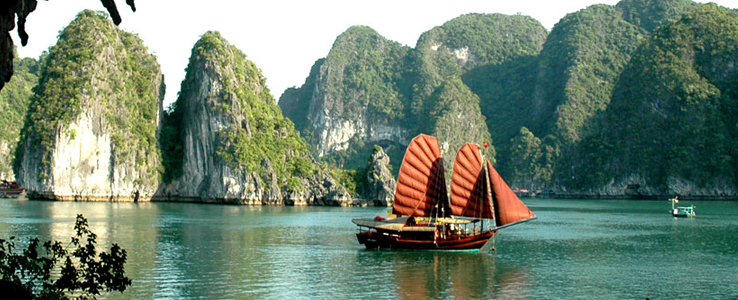
These boats were not created under ideal conditions. They were built with limited financial resources, often relying on personal loans and local craftsmanship rather than formal shipbuilding processes. Yet, they introduced a fundamentally different approach to tourism. Instead of rigid schedules, they offered flexibility. Instead of standardized routes, they allowed for customization. Instead of treating passengers as part of a group, they treated them as individual travelers.
This shift may seem simple today, but at the time, it represented a significant departure from existing models. It redefined what it meant to visit Halong Bay and laid the foundation for the modern cruise experience.
Early 1990s: The First Traditional Junk Boats Set Sail
As these early initiatives proved successful, more private operators began to enter the market. Among the first names to emerge were Bai Tho Junk, Hải Âu Junk, and Hoàng Long, each contributing to the gradual expansion of tourism on the bay.
At that stage, the scale remained modest. The total number of tourist boats was still around 20, and the industry was far from mature. However, what mattered was not the number of vessels, but the shift in mindset. These operators introduced a model that emphasized experience over structure, allowing travelers to engage with the bay in a more meaningful way.
The use of wooden boats, inspired by traditional designs, became a defining characteristic of this period. These vessels were not only functional but also symbolic, representing a connection to local maritime heritage and reinforcing the authenticity of the experience.

Bai Tho Junks and Over 30 Years of Continuity
Founded in 1991, Bai Tho Junks is part of this first generation of private operators and remains one of the longest-standing brands on Halong Bay. Its history is closely intertwined with the broader development of tourism in the region, reflecting both the challenges and opportunities that have shaped the industry over the past three decades.
What distinguishes Bai Tho Junks is its consistent approach. While the market has evolved and diversified, the company has maintained a focus on traditional wooden vessels and experiential travel. Rather than shifting entirely toward large-scale operations, it has continued to develop journeys that prioritize atmosphere, authenticity, and connection to the natural environment.
This approach is particularly evident in its focus on Bai Tu Long Bay, a less crowded area that offers a quieter and more preserved alternative to the central routes of Halong Bay. By operating in this area, Bai Tho Junks continues to reflect the original spirit of exploration that defined the early days of tourism on the bay.

2000s–Present: From Dozens to Hundreds of Cruises
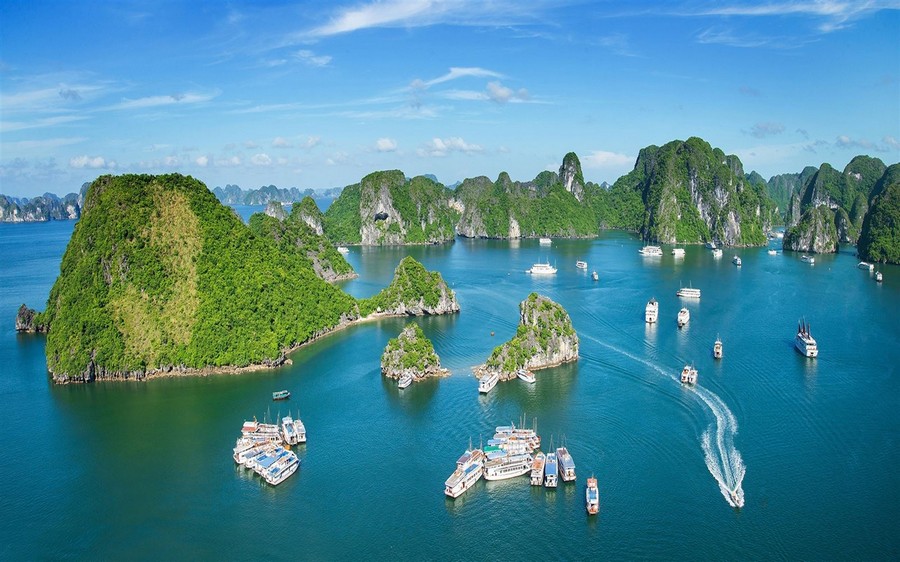
Today, Halong Bay has become one of the most recognized travel destinations in Southeast Asia, with hundreds of vessels operating across its waters and a wide range of experiences available to international visitors. The industry has grown significantly in scale, supported by improved infrastructure, global demand, and ongoing investment.
Despite this growth, the legacy of earlier periods remains visible. The structure of multi-day itineraries, the importance of staying on the water, and the continued presence of wooden junk boats all trace their origins back to the earliest stages of tourism development on the bay.
The evolution of Halong Bay tourism is therefore not a replacement of the past, but an extension of it. Each phase, from colonial exploration to state management to private innovation, has contributed to the experience that exists today.
A Story That Continues on the Water
The history of junk boats in Halong Bay is not defined by a single moment or a single actor. It is the result of multiple layers of development, shaped by different groups over time, each responding to the conditions and opportunities of their era.
From the early fleets of companies like P. Roque, to the state-operated vessels such as Hạ Long 01 and Vượt Sóng, to the pioneering private boats like Hướng Triều, and finally to long-standing operators such as Bai Tho Junks with the new chapter Aime’e Cruises, the story reflects a continuous process of adaptation and reinvention.
What remains constant, however, is the central role of the boat itself. Whether powered by steam, engine, or sail, the vessel has always been the medium through which Halong Bay is experienced.
And as long as travelers continue to move slowly across these waters, taking the time to observe, to reflect, and to connect with the landscape, the story of junk boats in Halong Bay will continue to evolve, carried forward not only by history, but by every journey that takes place upon it.
Sources
- Quang Ninh Newspaper, “Du lịch Hạ Long qua các tư liệu báo chí xưa”
- Quang Ninh Newspaper, “Chuyện về ông ‘Lãng liều’ và đội tàu du lịch tư nhân đầu tiên trên Vịnh Hạ Long”


 Français
 Tiếng Việt